

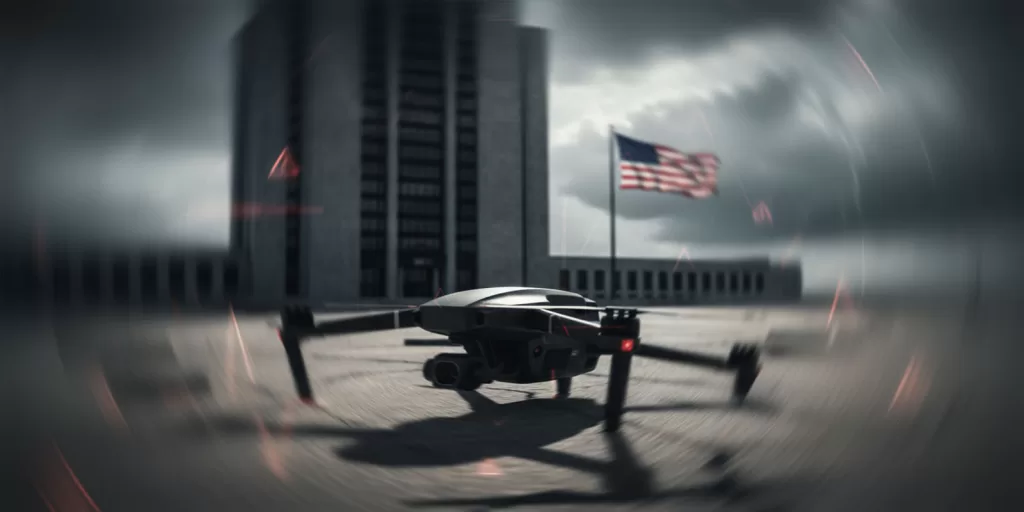
The FCC just dropped a bomb on the U.S. drone industry—and the fallout could hit harder than anyone expected. Headlines scream “bans” and “security threats,” but the truth behind the ruling is far more disruptive than most pilots, operators, and businesses realize.
This isn’t just about one company or a foreign competitor. It’s a sweeping, industry-wide shakeup that could skyrocket costs, stall innovation, and put commercial operators in a perilous position. Here’s what they’re not telling you—and why every drone professional needs to pay attention.
Introduction: Cutting Through the Chaos
The FCC’s new ruling claims to “protect America” from foreign drones, but the reality is far more complex—and potentially damaging. From agriculture to construction, search and rescue to law enforcement, drones are indispensable tools. Yet this sweeping ban threatens to disrupt supply chains, increase costs, and stall innovation across the U.S. drone industry.
This article breaks down the five most critical truths about the FCC drone ban, revealing the hidden impact on commercial pilots, businesses, and the broader industry.
1. It’s Not Just DJI — It’s a Blanket Ban on All New Foreign Drones
While many expected targeted action against DJI or Autel, the FCC went broad: all new unmanned aircraft systems (UAS) and components made abroad are on the covered list.
Even historically compliant European companies like Parrot (France) and Wingtra (Switzerland) are banned by default unless they receive a “specific determination” from the Department of Defense and Department of Homeland Security.
Industry analysts warn this “guilty until proven innocent” approach gives federal agencies immense, unchecked power over foreign drone manufacturers, threatening innovation and access to advanced technology.
2. Your Current Drone is Safe — But Replacements Could Bankrupt Your Business
Here’s the relief: your existing approved drones remain legal. The ban affects only new models seeking FCC approval.
The real danger lies in replacement costs. Affordable foreign drones are frozen out, meaning a typical $2,000 workhorse could jump to $15,000 or more.
Domestic manufacturers focus on high-margin enterprise models, leaving small businesses without practical alternatives. This could strain budgets, reduce operational efficiency, and slow projects dependent on drone deployment.
3. The “Security” Rule Might Just Be a Bureaucratic Shortcut
Framed as a national security measure, the sweeping ban may actually be a bureaucratic hack. Regulators have long faced a “whack-a-mole” problem: ban one foreign company, and a shell company quickly fills the gap.
Now, the burden of proof shifts: manufacturers must prove they are safe, rather than regulators proving they’re a threat. While this reduces regulatory red tape, it grants agencies broad discretionary power—raising concerns about fairness and accountability.
4. The Ban Reaches Inside Your Controller
The FCC’s definition of “critical components” is alarmingly broad. It includes:
- Flight controllers
- Cameras
- Sensors
- Data transmission devices
- Ground control stations
Even a smartphone used as a controller display could classify as a “foreign-made critical component,” potentially blocking your system from approval.
This overreach threatens adjacent industries, from professional camera gimbals to wireless video transmission systems, creating ripple effects across drone-reliant businesses.
5. “Protecting America” Could Actually Make Us Weaker
Ironically, the ban may reduce operational readiness rather than enhance it. Forcing industries to rely on less capable, more expensive domestic drones slows workflows, reduces efficiency, and impacts safety.
Consider the sectors affected:
- First responders using drones for search and rescue may lose access to high-performance UAVs.
- Farmers and agricultural operators could face delays and reduced productivity.
- Construction and infrastructure teams may encounter higher costs and slower inspections.
One analyst warned the FCC ban could be a catastrophic step backward, weakening U.S. operational capability across critical industries.
Takeaway: A Self-Inflicted Wound?
The FCC drone ban has created uncertainty, raised costs, and stalled innovation in the U.S. drone market. While securing a domestic supply chain may be the long-term goal, the immediate impact is severe.
Commercial operators and businesses must ask: What other professional tools could face similar restrictions next? How will replacement costs affect small and medium-sized operators? Can domestic manufacturers deliver affordable alternatives fast enough?
For drone pilots and businesses, staying informed and planning for replacement costs is no longer optional—it’s essential. The FCC drone ban isn’t just a policy—it’s a game-changer for the entire U.S. drone industry.
If you have any questions, let us know! If you’d like to hire us, you can get more information here.
Written by: Tony Marino, MBA – FAA Certified Part 107 Commercial Drone Pilot and Chief Business Strategist at Aerial Northwest
Disclaimer: The information provided in this blog post is for general informational purposes only and should not be construed as legal advice.
Resources
FAA Resources: FAA DroneZone
Article: What Does it Mean to Decode the Drone Industry?
Article: Pitch Perfect: Guide for Drone Pilots to Get Jobs
References
U.S. House of Representatives. (2025, December 7). Rules Committee Print 119–16: Text of House Amendment to S. 1071 (National Defense Authorization Act for Fiscal Year 2026) (H.R. 3838, 119th Cong.).
Starting Your Own Drone Service Business
Pick up your copy today on Amazon and wherever fine books are sold.

DRONE BUSINESS STRATEGY MAGAZINE
A free digital publication made exclusively for all small business drone pilots to them help start-up, become profitable while sustaining a competitive advantage within the drone service industry sector they opt to serve.
“If you love to fly, we’d love to have you come aboard!”
We share your information with no one. Our Privacy Policy.







1 Comment
Leave your reply.