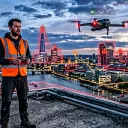
To avoid disruptions during a drone flight, a RPIC and VO may find the following to be helpful: wearing vests with “Do not Disturb” printed on the back, placing signs around the landing pad and in the general vicinity, and printing fliers that can be handed to spectators which answer many of their questions.
Communication between the RPIC and the VO is paramount. The VO must communicate to the pilot any information quickly and accurately, so it is vitally important that the pilot trusts the judgment of the visual observer and acts upon their advice without question. The FAA discourages the use of walkie-talkies, so the VO should be in close proximity to the […]
The average distance a drone can be seen, depending on terrain, air conditions, and other obstacles, will range from 1,000 – 2,000 feet which is less than one half mile, even though some drones can physically fly up to 6 miles away. If the pilot and visual observer lose sight of the drone for more than 15 seconds, the pilot […]
A Visual Observer should look for tripping hazards by the pilot or the visual observer, cars or other vehicles, animals/wildlife, and other people in the vicinity. The visual observer should also monitor the sky for hazards such as weather, tree lines, high wires, and aircraft or any other detectable objects.
A Visual Observer (VO) is a person who assists a drone pilot by maintaining visual observation during UAS operations. The use of a VO is useful for drone pilots because it helps to increase performance and reduce risk, as the VO can scan the sky and ground for obstacles that could impede a successful flight.